Scope detail, duration and references for any project in the portfolio, on request.
Ask usA scoping call with the regional team that would actually run the work.
Book a meeting
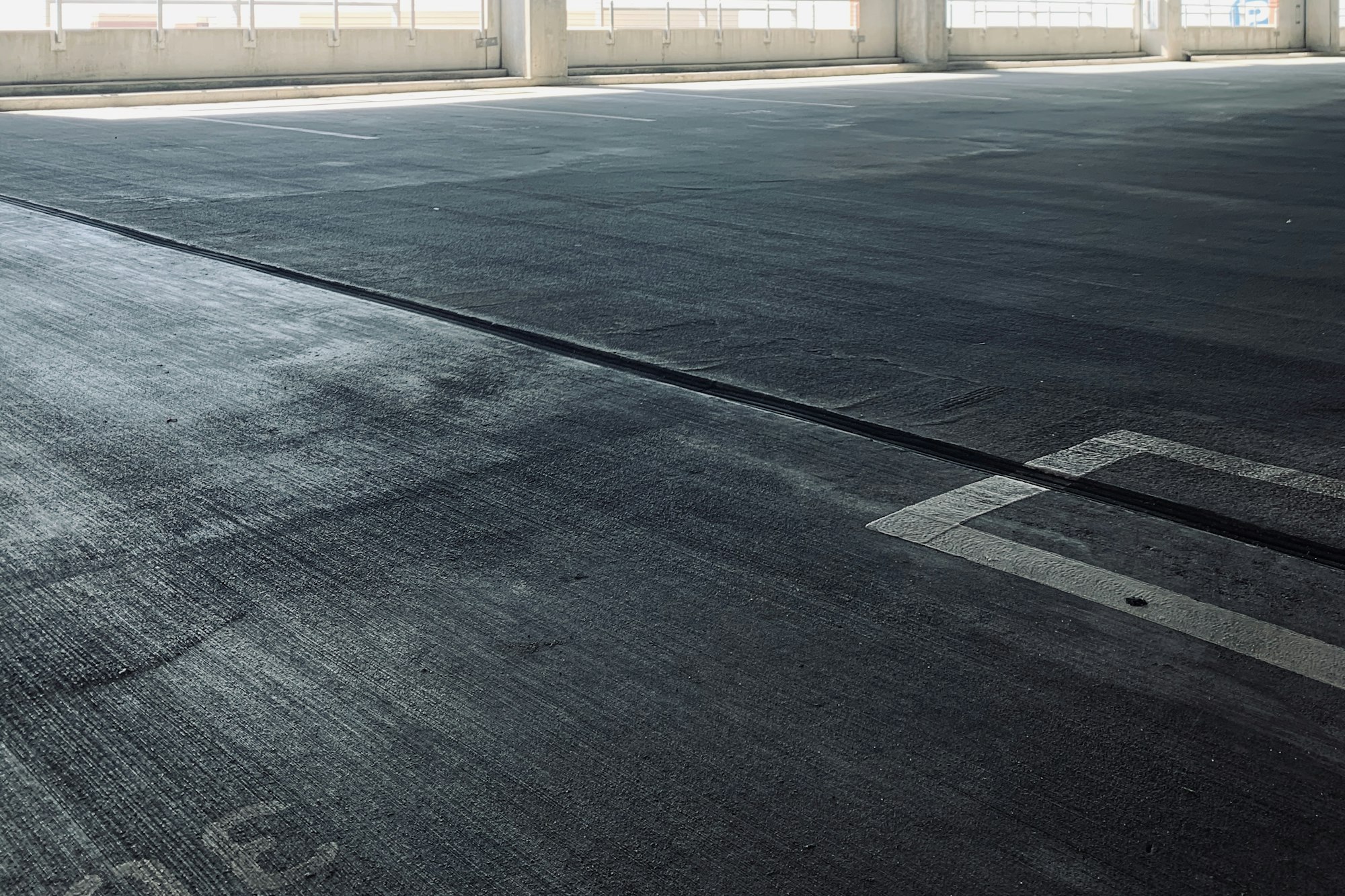
Traffic coatings, expansion joints and concrete repair on garages and podium decks, phased so the building never loses all its parking at once.
Parking structure repair restores concrete garages and podium decks: spalled and cracked concrete, corroded reinforcing, expansion joints, drainage and the traffic coating that protects the slab from water and de-icing salts. Apex phases the work level by level so residents and tenants keep parking, and self-performs the coatings.
A parking structure is a roof that cars drive on, and it gets treated like paving. Traffic coatings wear through, expansion joints dry out, and chloride works its way down to the reinforcing steel. The repair is cheap while it is a coating problem and expensive once it is a concrete problem.
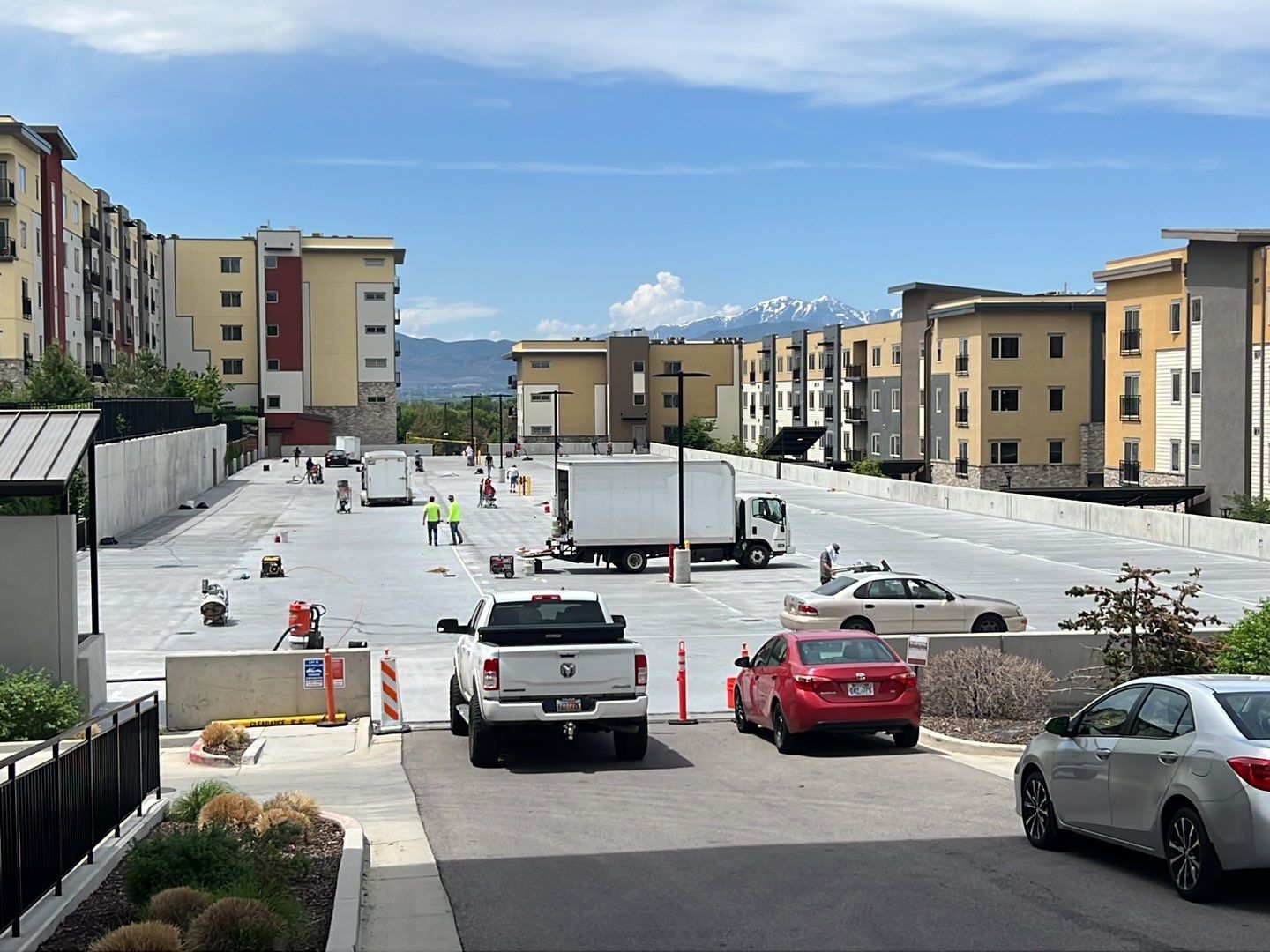
The operational constraint is parking count. We phase garage work so the building never loses all its spaces at once, which usually means smaller work areas, more mobilizations, and a schedule built around when your residents or tenants actually park.
Night work
Where a garage cannot lose its stalls by day
Traffic plan
Phased so the asset keeps parking
Waterproofing
Self-performed, warranted
The line items we carry on a parking structures scope, and what each one actually covers.
Vehicular traffic coating systems
Full and partial-depth coating replacement, specified for the traffic and the exposure.
Expansion joint replacement
The joints that are doing the work when the structure moves, and the first thing to leak when they fail.
Post-tension and concrete repair
Spall repair, reinforcing treatment and post-tension work done under engineering direction.
Drainage and waterproofing
Drains, sumps and membrane work so water leaves the deck instead of finding the level below.
Striping, signage and lighting
Restriping, wayfinding and lighting upgrades scheduled into the same closure.
Phased closures
Work areas sized to your actual parking count, with notices and temporary assignments handled.
Four stages, one contract. Nothing here is a handoff to somebody else.
Sound and map
The deck is sounded and the delaminated area mapped and measured, so the repair quantity is a fact rather than a percentage guess.
Agree the phasing
Stall counts, traffic routing and resident notice agreed with the property before a crew mobilises.
Repair, then coat
Structural repairs completed and cured before any topping goes down.
Stripe and hand back
Striping, signage and lighting restored as each phase reopens, not at the end of the job.

Chloride and spalling
What looks like a surface pop is usually corroding steel. We sound the deck and map it before pricing.
Parking count
Phase sizes are set by how many spaces you can lose at once, not by what is fastest for the crew.
Cure times
Coating systems need real cure windows. We schedule around them rather than reopening early and repeating the work.
Two contractors can price the same building a long way apart and both be honest about it. These are the variables that explain the gap — worth asking every bidder, not just us.
Delamination quantity
Sounded and mapped before pricing. The percentage of deck that is delaminated drives everything else on the job.
Traffic topping system
A urethane traffic coating and an epoxy broadcast are different money and different service lives.
Phasing and stall loss
How many stalls the property can give up at once. Fewer stalls means more phases, which means more mobilisations.
Structural repair
Post-tension, rebar and slab repairs sit under the coating scope and are engineered, not estimated.
.jpeg)
The trades that decide whether this scope holds up are ours. Everything else runs through trade partners we have used in that market before, on our contract and our warranty.
Three projects from the portfolio where this scope was the job, or a large part of it.
How much does parking garage repair cost?
Parking garage repair cost depends on the condition of the concrete and the coating system required. Main drivers are the area of delaminated or spalled concrete, post-tension or reinforcing repairs, expansion joint replacement, coating type, drainage corrections, and how many phases are needed to keep parking available. Apex maps the deck before pricing so repair quantities are measured rather than guessed.
How long does a parking deck traffic coating last?
Service life varies with traffic volume, sun and freeze-thaw exposure, deicing salts and maintenance, so there is no single number. Wear shows first at drive aisles, turns and ramps. Apex maps the deck and reports the percentage of coating that has failed, which tells you whether spot repair or a full recoat is the better investment.
Can we spot-repair the coating or does the whole deck need recoating?
Spot repair is appropriate when failure is localized and the surrounding coating still has life left. When failure is widespread or the membrane underneath is compromised, a full recoat is usually more economical over time. Apex maps the deck, reports the failed percentage and prices both options when both are realistic.
Can the garage stay open during repairs?
Yes. Apex phases garage work so the building never loses all its parking at once. The first step is agreeing how many spaces can come offline at a time; the phase plan is built around that number, with signage, resident notices and temporary parking assignments. More phases can add some cost, which Apex shows so you can choose the trade-off.
Who handles the structural engineering for garage repairs?
A licensed structural engineer designs concrete and post-tension repairs, and Apex builds exactly to those details. Apex coordinates the engineer’s involvement, opens areas for evaluation, documents conditions found, and schedules the engineer’s observations during the work so the repair record is complete at closeout.
Most scopes touch more than one of these. They all run on one contract.

Tell us the asset, the scope and the timeline. We will come back within one business day.